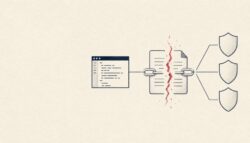
Passkeys in the Enterprise: The End of the Password

The password is the vulnerability everyone knows about and few manage to eliminate. Passkeys step in to replace it by binding authentication to a device and a biometric factor. For companies, rollout is less a technology issue than a deployment question. The technology is ready-the challenge is clean execution.
Key Points in Brief
- No more shared secret: Passkeys use a key pair. The private part never leaves the device-there is no password to intercept.
- Phishing falls flat: Because the key is bound to the real domain, fake login pages do not work.
- Recovery is the critical point: What happens when a device is lost determines the success of the rollout.
Why Passkeys Beat the Password
What is a Passkey? A passkey is a cryptographic authentication method that replaces a password with a key pair. The private key remains securely on the user’s device; the public key is stored with the service. Authentication is confirmed locally via biometrics or device PIN.
Definition · Passkey
A cryptographic authentication method that replaces a password with a key pair. The private key remains on the user’s device; the public key resides with the service. Authentication is verified locally via biometrics or device PIN.
The security gain results from eliminating the shared secret. A password can be guessed, intercepted, or stolen from a database. A passkey carries no such value on the server, because only the public part is stored there, which an attacker cannot use. Even a successful breach into the user database yields no usable login credentials.
The Built-in Phishing Protection
Perhaps the greatest advantage is the domain binding. A passkey for the real company site cannot be used on a cloned phishing site because the protocol verifies the remote party. This removes the foundation from the most common attack vector against access credentials.
For security officers this is a strong argument. Many incidents begin with phished credentials. This exact chain breaks when no interceptable secret exists anymore. The protection works without employees needing to be trained to recognize phishing. It is built into the protocol, not into individual vigilance. This is a fundamental difference from classic second factors such as one-time codes, which can still be intercepted.
Where Rollout Gets Stuck
The honest view: The hardest part is not the login, but recovery. If a device is lost, a secure way back into the account is required-one that does not itself become the new vulnerability. Falling back to the old password as an emergency exit would nullify the benefit, because the attacker would simply use that route.
In the enterprise, device management and mixed platforms come into play. Users work on Windows machines, Macs, and smartphones from various manufacturers. Passkeys must remain usable across these devices without security suffering. This decides whether the rollout succeeds in everyday operations or fails due to practical hurdles.
How Rollout Succeeds Step by Step
A clean rollout plan does not begin with disabling the password, but with establishing recovery. First, it is defined how a user can securely regain access to their account after device loss-for example, via a second registered device or a controlled process through IT support with rigorous identity verification. Only once this path is in place does the rest follow.
Rollout Plan in Stages
- ✓Define recovery process (second device or verified IT support)
- ✓Initially offer passkeys in addition to the existing method
- ✓Users get used to the login; IT gathers device experience
- ✓Finally disable the password for secured accounts
Passkeys are then initially offered in addition, running in parallel to the existing method. Users register their passkey and become accustomed to the login while IT collects experience with the company’s own devices. In the final stage the password is disabled for the secured accounts. This staged approach is safer than an abrupt switch because it tests the critical recovery process before it is needed in an emergency.
What Passkeys Mean for Compliance
Passkeys are not only a convenience gain but directly contribute to regulatory requirements. Regulations such as NIS2 demand effective measures against unauthorized access. A phishing-resistant authentication method delivers precisely that. Those who technically eliminate the most common cause of breaches can demonstrate this to regulators.
For leadership, this is an argument that reaches beyond IT. A single successful phishing attack can trigger a costly incident. An authentication method that neutralizes phishing within the protocol measurably reduces this risk and at the same time strengthens defensibility toward auditors and insurers.
Frequently Asked Questions
Each question is closed. Tapping unlocks the answer.
What distinguishes a passkey from a password?
A password is a shared secret that can be transmitted and stolen. A passkey uses a key pair whose private part never leaves the device. Only the useless public part is stored on the server.
Does a passkey really protect against phishing?
Yes. The passkey is bound to the real domain and does not work on forged pages. This strips the most common method of harvesting credentials of its effectiveness.
What happens if the device is lost?
This requires a previously defined recovery path, for example a second registered device or a secure backup method. This path is the most critical part of the rollout.
Do all passwords have to disappear immediately?
No. A staged rollout plan that initially offers passkeys in addition is more practical than an abrupt switch, especially with mixed platforms.
Are passkeys also suitable for companies with many devices?
Yes, but they require well-considered device management and clear recovery rules. With these prerequisites they can also be rolled out in large environments.
Editor’s Picks
Editor’s PickAdaptive MFA: NIS2 Pressure as a Zero-TrustEditor’s PickWhen a Phone Call Halted Car ProductionEditor’s PickWhat Is NIS2? Definition, Obligations, and Liability

More from the MBF Media Network
cloudmagazinKRITIS in the Cloud: What Secures the MigrationMyBusinessFutureThe AI oversight in Germany now has an addressDigital ChiefsThe AI writes the code. Who is liable for it?