Harden Active Directory Before the Attacker Does

Active Directory is the heart of IT in most companies. Whoever controls it controls everything: every server, every access, every share. This is precisely why it is the primary target after a successful breach. The good news is that the paths to it are known. Anyone who understands the typical attack paths can close them deliberately before an attacker walks them.
Key Takeaways
- The Goal: After the breach, attackers want control over Active Directory because it is the master key to the entire network.
- The Levers: Separate and protect privileged accounts, disable legacy protocols, and close the recurring attack paths.
- The Reflex: Hardening is not a project with an end date but an ongoing process of separation, decommissioning, and monitoring.
Why Active Directory Is the First Target
An attacker who compromises a single workstation has achieved little. The real value lies in lateral movement. Active Directory manages identities, rights, and access to nearly all resources in a Windows environment. Anyone who gains control of a domain administrator can log in anywhere undetected, exfiltrate data, and-in the worst case-encrypt the entire environment.
This is why almost every major attack follows the same pattern. After the initial access, the attacker looks for ways to escalate privileges and move laterally through the network. The goal is always the same: from a normal account to a privileged account and from there to full control over the domain. Anyone who makes this movement more difficult robs the attack of its force.
The Typical Attack Paths
The paths to domain control are well documented. In Kerberoasting, an attacker requests tickets for service accounts and cracks their often-weak passwords offline. With unconstrained delegation, a compromised server can impersonate other users’ identities. Misconfigured access rights in the directory allow attackers to gradually acquire higher privileges step by step.
Credential theft directly from system memory adds to this. When an administrator logs into an already compromised machine, the attacker can harvest the credentials and reuse them. These paths are not exotic tricks but standard in almost every attack. What they have in common is that targeted measures can make them significantly harder to exploit.
The Tiering Model as the Foundation
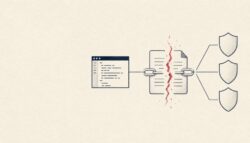
The single most effective measure is separating privileges into tiers-known as tiering. The idea is simple: accounts with high privileges may only log into systems that are equally well protected. A domain administrator never logs into a normal workstation because their credentials could be harvested there.
Definition · Tiering Model
Separation of privileged accounts into tiers: domain controllers with the highest privileges, followed by servers and applications, then workstations. Privileged accounts must not mix between the tiers.
In practice, this means three tiers. The top tier includes the domain controllers and the highest privileges. The middle tier covers servers and applications. The bottom tier includes user workstations. Privileged accounts must not cross between these tiers. This requires separate administrative accounts for each tier and dedicated, specially hardened management workstations for the most sensitive tasks.
Concrete Hardening Measures
Concrete steps build on the foundation of tiering. Legacy and insecure protocols must be disabled, first and foremost older authentication methods that can be easily intercepted. Local administrator passwords on machines should be unique and centrally managed so that a cracked password does not open many systems at once.
Service accounts need long, random passwords-or better, managed accounts whose passwords the system itself rotates. This removes the foundation for Kerberoasting. The number of highly privileged accounts should be reduced to the absolute minimum. Every unconstrained delegation should be reviewed and removed wherever possible. Each of these measures closes one of the known attack paths.
Detection and Ongoing Control
Hardening alone is not enough because configurations tend to degrade in everyday operations. A new service account, a hastily granted permission, a forgotten test account-and a path is open again. This is why ongoing monitoring is part of hardening. Suspicious ticket requests, unusual logins by privileged accounts, or changes to critical groups should trigger alerts.
Equally important is regularly examining your own directory through an attacker’s eyes. Tools that visualize attack paths reveal exactly the chains an account could use to reach domain control. Knowing these paths allows you to close them in priority order instead of working blindly across many areas at once.
Where to Start
The starting point is an honest inventory. How many highly privileged accounts actually exist, where do they log in, and which legacy protocols are still active? This overview almost dictates the sequence: first reduce the number of privileged accounts, then restrict their logins to protected systems, then close the known protocol and delegation gaps.
First Hardening Steps
- ✓Reduce the number of highly privileged accounts to the absolute minimum
- ✓Restrict logins of privileged accounts to protected systems
- ✓Disable legacy and insecure protocols
- ✓Manage local administrator passwords as unique and centrally
- ✓Review and remove unconstrained delegation
The mistake would be waiting for the perfect overall concept. Every closed path reduces risk immediately. Hardening Active Directory is not a one-time project but a discipline that is established once and then maintained continuously. The first step counts more than the perfect plan.
Frequently Asked Questions
Each question is closed. Tap to reveal the answer.
Why Is Active Directory Such a Popular Target?
Because it manages identities and access rights for nearly the entire Windows environment. Anyone who gains control of the domain can log in anywhere, exfiltrate data, and-in the worst case-encrypt everything.
What Is Tiering and Why Is It So Important?
Tiering separates privileged accounts into tiers. A domain administrator only logs into equally well-protected systems-never a standard workstation. This prevents credentials from being harvested on a compromised machine.
What Is Kerberoasting?
An attacker requests tickets for service accounts and tries to crack their often-weak passwords offline. Long, random, or automatically rotated passwords for service accounts remove the foundation for this attack.
Is Hardening Active Directory Once Enough?
No. Configurations degrade in everyday operations through new accounts, quick permissions, or forgotten access points. Hardening requires continuous monitoring and regular review of attack paths.
Where Should You Start?
With an inventory of highly privileged accounts and active legacy protocols. Then reduce the number of privileged accounts, restrict their logins to protected systems, and close the known gaps.
Editor’s Picks
Editor’s PickAdaptive MFA: NIS2 Pressure as a Zero-TrustEditor’s PickWhen a Phone Call Halted Car ProductionEditor’s PickWhat Is NIS2? Definition, Obligations, and Liability



More from the MBF Media Network
cloudmagazinKRITIS in the Cloud: What Secures the MigrationMyBusinessFutureThe AI oversight in Germany now has an addressDigital ChiefsThe AI writes the code. Who is liable for it?