Deepfake CEO Fraud: How Executives Can Fend Off Voice Cloning
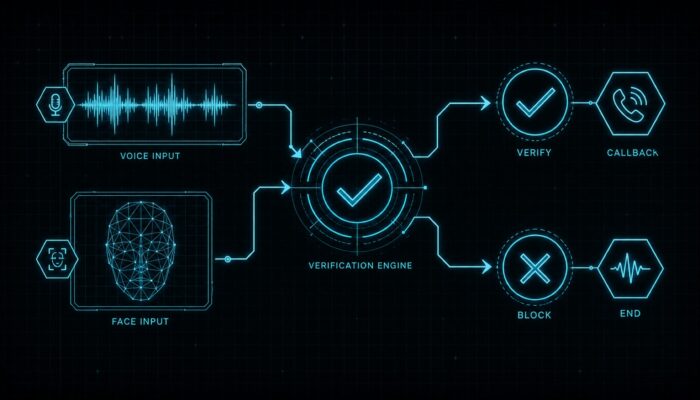
Just a few seconds of audio can be enough to convincingly clone a voice. This makes it possible to impersonate a CEO over the phone, instructing an urgent bank transfer. Antivirus software won’t help here. Protection comes from a fixed verification process before any payment is made. Executives and finance teams need agreed rules that kick in before money changes hands.
Key Takeaways
- The barrier is low: Just a few seconds of publicly available audio is enough to create a usable voice clone. Voice messages, interviews and calls provide the necessary material.
- Your ear isn’t protection: Studies show people rarely recognize cloned voices reliably. Relying on your hearing offers no defense.
- Clear rules beat gut feeling: Call-backs via known channels, agreed code words and dual-control for payments stop fraud more effectively than any purely technical solution.
Related:AI Voice Cloning: How DACH Companies Are Fighting Back / AI Phishing: Mail Filters Are Flying Blind
Why executives are the prime target
What is a deepfake? A deepfake is an AI-generated or AI-altered medium that convincingly mimics a real person’s voice, face or both. For voice cloning, a short audio sample is enough for the system to make the person say sentences they never spoke.
What’s new isn’t the scam-it’s the tool. In the so-called CEO fraud (known in German as “Chef-Masche”), an attacker poses as the CEO or CFO and orders an urgent transfer to a new account. In the past, this relied on fake emails. Today, the call comes with the familiar voice, and in advanced cases even a fake video call.
Executives are attractive targets because their voices are publicly available and their instructions carry weight. Lectures, interviews and podcast appearances provide plenty of audio material. A well-known case at a Hong-Kong engineering firm showed how an employee transferred nine-figure sums after a fake video conference. Attackers bank on authority and time pressure, a combination designed to override any review steps.
Why technology alone isn’t enough
The obvious hope is a tool that detects fakes. Such deepfake detectors exist and they help. Yet no company should rely on them, because fakes improve as fast as detection does.
Human perception is even weaker. Studies show people can’t reliably spot high-quality deepfake videos, and many can’t distinguish a cloned voice from the real thing. The ear that many hope to fall back on in an emergency is therefore no reliable control. Only a robust process can provide real protection.
The verification playbook for leadership and finance teams
Effective protection relies on a few clearly defined rules that every payment instruction must follow. The key is that these rules are established in advance and not up for debate in an emergency.
How to verify
- Callback via a known, self-selected number
- Pre-agreed code word for sensitive instructions
- Four-eyes principle for every payment release
- Fixed approval limits and a secondary channel
What you can’t rely on
- The voice sounds authentic
- The number on the display looks familiar
- The caller knows internal details
- The instruction comes from the very top
The single most effective step is the callback. Anyone receiving an unusual payment instruction calls back via a self-selected number-not the one provided in the call. This is paired with a pre-agreed code word to separate genuine from fake instructions, and the four-eyes principle, where no critical payment is approved by a single person. Awareness training keeps these rules top of mind, because a process only works if someone applies it at the decisive moment.
Where GDPR and NIS2 come into play
Voices and faces are personal data. Processing audio recordings for verification or fraud detection falls under the GDPR umbrella and requires a solid legal basis plus clear deletion rules. Biometric methods demand extra care.
For many organisations, NIS2 adds another layer. The directive obliges affected entities to implement adequate risk management and report significant incidents. A successful deepfake fraud causing major damage can qualify. Protecting against voice clones thus shifts from a purely financial concern to part of security and compliance obligations.
Frequently Asked Questions
Every question is locked. A tap unlocks the answer.
How much audio material does an attacker need to clone a voice?
Very little. Reports indicate that just a few seconds of speech can produce a usable clone. Since executives often speak publicly, the material is often publicly available-from interviews, talks, or podcasts.
Can you reliably detect a cloned voice by sound?
Hardly. Studies show most people cannot reliably distinguish a well-made voice clone from the real thing. That’s why sound alone must never be the criterion for payment approval; only a defined verification process counts.
What’s the single most effective measure?
The callback via an independent, self-selected channel. When you verify an unusual instruction by calling back on a number you choose-not the one given in the call-you directly counter the time pressure attackers exploit.
Is a deepfake detection tool sufficient protection?
Not on its own. Such tools are a useful addition, but fakes keep improving. Only the combination of organisational rules-callback, code word, four-eyes principle-and trained staff provides reliable protection.
Do we need to formalise this from a compliance standpoint?
In many cases, yes. Processing voice data triggers GDPR obligations, and entities covered by NIS2 must include protection against such attacks in their risk management and reporting duties. Guarding against voice clones is therefore also a compliance task.
Editor’s Picks
Editor’s PickDeepfake Voices Stealing Millions from Executive SuitesEditor’s PickSecurity Awareness That Works: Continuously Instead of AnnuallyEditor’s PickAI-Driven Threat Analysis: What German Security Operations Centers Need Now



More from the MBF Media Network
cloudmagazinWhen AI Writes 80% of the Code, Who Checks It?Digital ChiefsAI Budgets Before the Summer: What CIOs Must Now DemonstrateMyBusinessFutureAsia Sourcing: What It Really Costs Small and Medium-Sized Enterprises