
Auth0: Adaptive Multi-Factor Authentication
Auth0, the identity platform for application teams, has introduced a new technology: Adaptive Multi-Factor Authentication. This innovation helps enterprises minimize hacker attacks and reduce the risk of data breaches. Fundamentally, Adaptive MFA is a valuable addition to Auth0’s existing product portfolio – and more than that: it ranks among the most advanced context-aware security features on the provider’s platform. In addition to Bot Detection and Breached Password protection, Auth0 also offers Brute Force Protection and Suspicious IP Throttling.
Adaptive MFA enables enterprises to implement powerful security controls without compromising user experience. That’s because Adaptive MFA only triggers when the system detects a potentially risky sign-in attempt. Whether such a risk exists is determined by a dynamically calculated “Risk Score,” which incorporates factors like anomalous device behavior and the reputation of an IP address. Risk increases significantly – for example – when a user attempts to log in from an unfamiliar location.
A second factor is required only when risks are detected
With Adaptive MFA, enterprises can be confident that users must complete additional authentication only when their behavior deviates substantially from established usage patterns.
For example: A user logs into the corporate network every morning at roughly the same time, from the same location, using a personal laptop. In this scenario, Adaptive MFA will require a second factor only if the login originates from a different location or occurs at an unusual time. The multi-factor process also activates when a different device or an unknown IP address is used. Developers can define the weight assigned to each of these factors when calculating a user’s Risk Score.
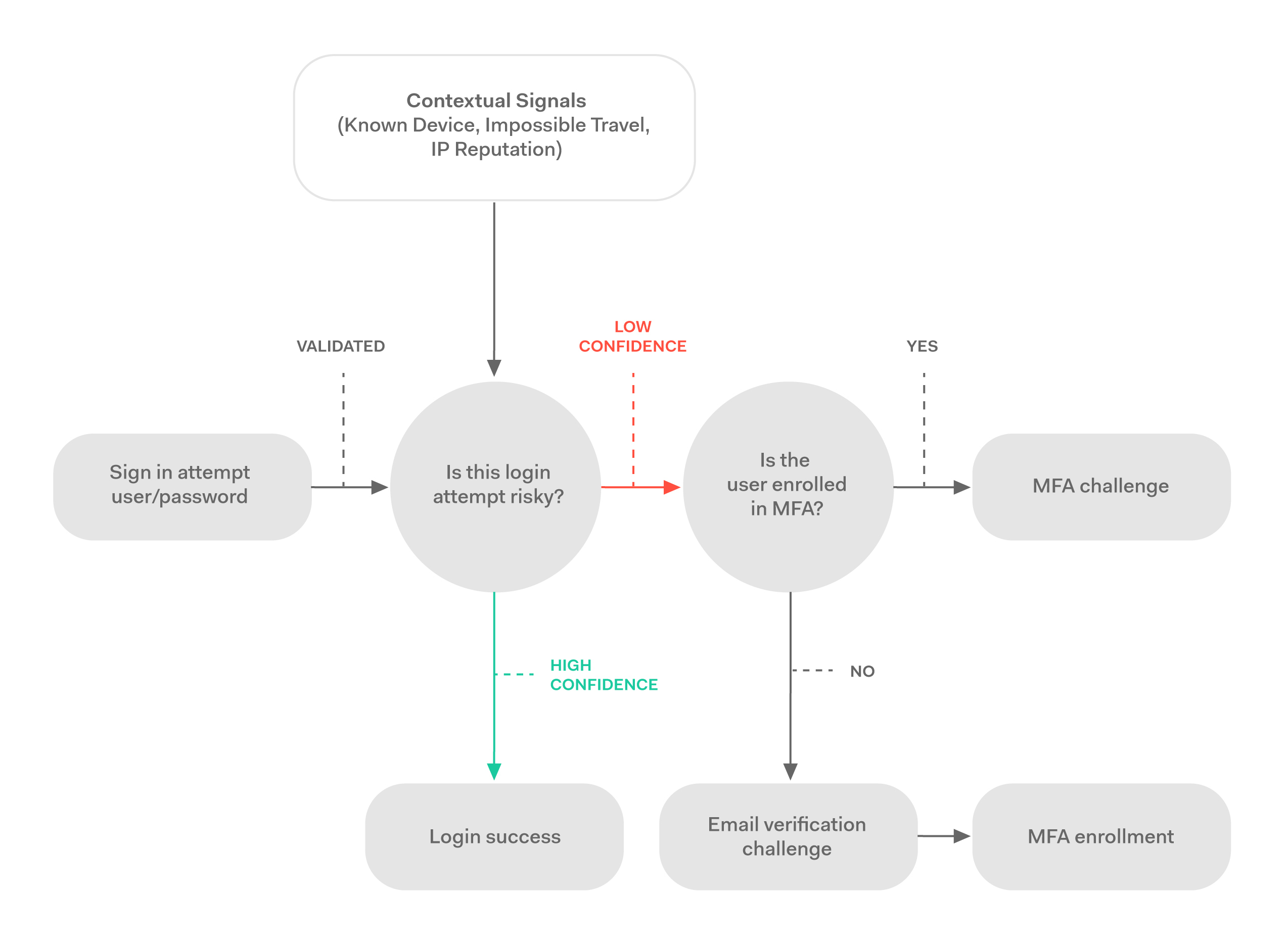
Illustration of how Adaptive MFA works. (Source: Auth0)
Although MFA has been proven effective at defending against account-based attacks, many organizations hesitate to adopt it – fearing that multi-factor procedures could degrade the user experience during login and logout across IT services and systems, thereby harming productivity.
This reluctance can result in missed business opportunities and increased support ticket volume. Market research firm Forrester projects that the global MFA solutions market will reach $2 billion by 2023 – a reflection of growing demand for intelligent, context-aware MFA solutions.
“Secure Access for Everyone”

Adaptive Multi-Factor Authentication dramatically elevates security posture. (Source: Auth0)
“Auth0’s mission is to provide secure access to IT resources for everyone. Effectively protecting user identity is a cornerstone of that mission,” explains Shiven Ramji, Chief Product Officer at Auth0. “This new capability extends our security profile’s functionality, empowering enterprises to defend against sophisticated cyberattacks – including automated attacks, account takeovers, and phishing.”
Therefore, according to Ramji, all organizations that have yet to strike the right balance between maximum protection and optimal customer experience should consider implementing Adaptive MFA. “The ability to reduce friction at the digital customer interface while simultaneously raising IT security standards is a decisive competitive advantage for our customers,” says Shiven Ramji.
For further details on Adaptive MFA, consult the whitepaper When is MFA the Right Choice? and visit the dedicated page Multi-factor Authentication.
Key Facts
Weak passwords: “123456” remained Germany’s most-used password in 2025.
Passwordless future: Since 2024, Microsoft, Google, and Apple have supported Passkeys as a standard.
Frequently Asked Questions
What is the difference between data privacy and data security?
Data privacy governs the lawful handling of personal data – including legal basis, purpose limitation, and data subject rights. Data security encompasses the technical and organizational measures designed to protect all data against loss, tampering, or unauthorized access.
Does every company need a Data Protection Officer?
In Germany, appointing a Data Protection Officer (DPO) is mandatory if at least 20 individuals are regularly engaged in the automated processing of personal data – or if special categories of data (e.g., health data) are processed.
What rights do data subjects have under the GDPR?
Rights include access, rectification, erasure (“right to be forgotten”), restriction of processing, data portability, and objection. Organizations must respond to such requests within one month.
Related Articles
- How a DDoS Attack Works
- How Company Size Correlates with Cybersecurity Risk Perception
- GDPR 2026: What’s Changing – and What Enterprises Must Watch
More from the MBF Media Network
- IT strategies for decision-makers at digital-chiefs.de
- More IT security trends at mybusinessfuture.com
Header Image Source: Auth0
Fact: According to the German Federal Commissioner for Data Protection and Freedom of Information (BfDI), the average processing time for a data protection complaint is eight months.
Fact: According to Mandiant, the average dwell time of an attacker inside a network is ten days.
TL;DR
- Market research firm Forrester estimates the global MFA solutions market will reach $2 billion by 2023.
- In addition to Bot Detection and Breached Password protection, Auth0 also offers Brute Force Protection and Suspicious IP Throttling.
- Illustration of how Adaptive MFA works.
- (Source: Auth0) Although MFA has been proven effective at defending against account-based attacks, many organizations hesitate to adopt it.


