Attack via legacy system: TUM took TUMonline offline

At the Technical University of Munich, attackers used the legacy portal myTUM to steal the central login passwords of everyone registered there, including a system administrator’s password for TUMonline. They used that access to attack TUMonline. The university took the system offline. It has been running again since 9 November.
Key takeaways
- The legacy system myTUM served as the entry point into TUMonline. Through the old portal, attackers obtained the central login passwords of everyone registered there, including a system administrator’s login credentials.
- TUMonline went offline after the attack and has been running again since 9 November. According to the university, the myTUM portal remains permanently offline.
- Accounts with MFA (multi-factor authentication) remained protected, according to TUM. The university asks everyone affected to change their password and then enable multi-factor authentication.
Related: Black October: Many attacks ran for months
The path from myTUM to TUMonline
According to a TUM spokesperson speaking to Bayerischer Rundfunk, the attackers most likely wanted to gain access to TUMonline by attacking the old portal. It was their gateway into the current campus management system.
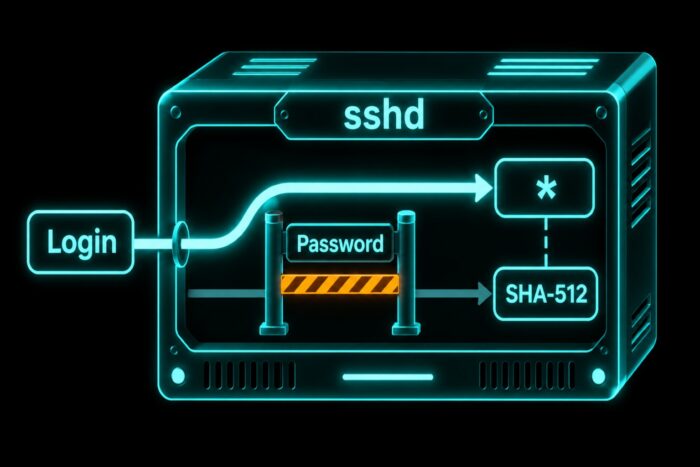
Through myTUM, the unknown attackers obtained the passwords for the central login to TUM systems, including login.tum.de and TUMonline. Everyone who had registered with myTUM is affected. The stolen passwords included that of a TUMonline system administrator. In this campus management system, the university manages central student records, including grades and applications for university places.
The attackers used the system administrator’s access to attack TUMonline. The university then took the system offline. According to the university, the myTUM portal remains permanently offline. On the morning of 9 November, TUM re-enabled password changes, and at 17:25 it reported TUMonline back in operation. Before using it, users must change their password and set up two-factor authentication.
What is a legacy system? A legacy system is an application that an operator keeps running even though newer systems have taken over its tasks, or are meant to. For security, what matters is which central services such a system is still connected to. At TUM, users logged in to the myTUM portal with the same central passwords used for login.tum.de and TUMonline.
What the logs show
A TUM spokesperson told Bayerischer Rundfunk that the attack on myTUM was probably intended to gain access to TUMonline. That succeeded. The passwords were not the goal. “We currently believe that virtually no data was exfiltrated, although this would have been possible.”
The university has largely logged the attackers’ activity within TUMonline. After evaluating these logs, it assumes that no further data from TUMonline is affected, for example grades or applications for university places. The review is still ongoing.
The potentially affected data identified by TUM
As early as 6 November, the university broke down which data may have been affected. Alongside the stolen passwords, names, private addresses and dates of birth may have been accessible for everyone affected. For employees, the business address and work phone number may also have been accessible. For students, the matriculation number, degree programme and number of semesters in their degree programme may also have been accessible.
TUM warns of a secondary risk. With a name, degree programme and address, fraudsters could compose phishing messages that look credible.
Accounts with MFA stayed protected
“User accounts with MFA were protected in this attack,” writes TUM in its statement. Multi-factor authentication requires a second form of verification in addition to the password. The university asks everyone affected to change their password and then enable MFA.
The attackers gained entry through a portal that was still in use, stealing a system administrator’s credentials for the central management system. For security teams, this highlights two areas to check: legacy systems still connected to central authentication and the protection of privileged accounts.
What TUM leaves open
TUM has not disclosed how the attackers initially got into myTUM. It also remains unclear how the stolen passwords were stored. The question of whether the system administrator had enabled MFA went unanswered.
TUM is not the only university in Munich with a security incident. Since 16 September, Ludwig-Maximilians-Universität (LMU) has been defending against and investigating a cyber attack on one of its IT systems. According to Bayerischer Rundfunk, it affected around 600,000 records of current and former students spanning about 50 years. There, the attackers gained access to the admissions system. Passwords were not affected at LMU.
Further answers at TUM will depend on continued analysis of the TUMonline logs.
Frequently asked questions
Answers are initially hidden. Tap a question to reveal its answer.
Can affected users change their password in TUMonline again?
Yes. Password changes have been available again since 9 November, and TUMonline is running again as well. TUM requires changing the password first and then setting up multi-factor authentication.
How can you spot fake requests in TUM’s name?
TUM says it never asks for passwords by email, phone or letter. A message that demands a password therefore does not come from the university, even if it states a name, degree programme or address correctly.
Which authorities has TUM involved?
The university has filed a criminal complaint and reported the incident to the Bavarian State Commissioner for Data Protection. Responsibility for the statement lies with Dr.-Ing. Alexander Braun, Executive Vice President for IT Systems and Services and Chief Information Officer of TUM.
Image source: AI-generated (November 2026)
Translated from the German original using artificial intelligence. The German version is authoritative.