What Is IT Baseline Protection? Germany’s Approach to ISMS
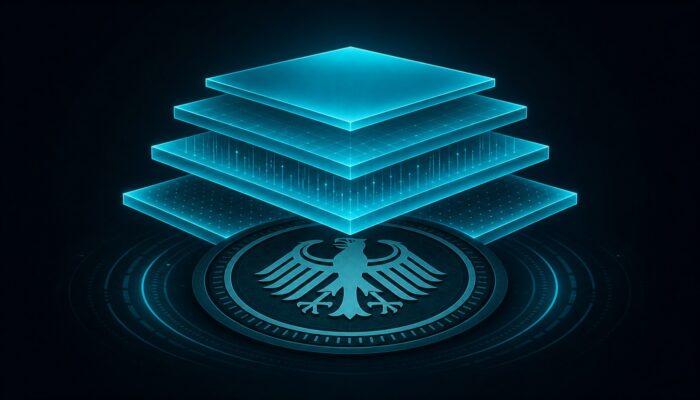
What is BSI IT-Grundschutz? IT-Grundschutz is the BSI’s methodology for building and operating an information security management system. It provides concrete components and requirements through BSI standards and the IT-Grundschutz Compendium (current edition 2023), rather than just formulating abstract goals. IT-Grundschutz is compatible with ISO/IEC 27001:2022 and can be certified as ISO 27001 based on IT-Grundschutz.
Key Takeaways
- What it is: A practical BSI methodology that outlines the path to an ISMS with ready-made components and test questions.
- Key components: The BSI standards 200-1 to 200-4 and the IT-Grundschutz Compendium with components for technology, organization, and processes.
- When is it useful: If a company needs concrete guidance rather than just defining goals, especially in the DACH and public sector environments.
How IT Baseline Protection Is Structured
The framework is formed by BSI standards. Standard 200-1 outlines the general requirements for an Information Security Management System (ISMS). Standard 200-2 defines the approach and offers three levels of protection: Basic protection for a quick start, Standard protection for comprehensive coverage, and Core protection for the most critical assets first. Standard 200-3 covers risk analysis, while Standard 200-4 addresses business continuity management.
The cornerstone is the IT Baseline Protection Compendium in the 2023 edition. It bundles more than 100 modules into ten layers covering topics such as servers, networks, applications, and organizational processes. Each module lists typical threats and concrete requirements. It is this concreteness that sets the German approach apart from a purely objective standard.
The four BSI standards form the methodological framework of IT Baseline Protection, from ISMS to incident management
Source: BSI
How a Project Unfolds in Practice
At the outset comes the structural analysis: Which business processes, applications, systems, and rooms are part of the information network? This is followed by the determination of protection requirements, which assigns each item a protection level ranging from normal through high to very high. The protection level determines how deep the security measures must go.
Next, the appropriate components of the compendium are matched and their requirements implemented. An as-built comparison reveals gaps. For areas with high or very high protection needs, a risk analysis according to Standard 200-3 supplements the baseline. The result is a traceable, auditable security standard.
GETTING STARTED WITH IT BASELINE PROTECTION
- ✓Define the information network and its scope clearly
- ✓Start with baseline protection to achieve early impact
- ✓Cleanly determine the protection needs for each process and system
- ✓Assign compendium components and document the implementation
IT-Grundschutz or ISO 27001
The two approaches are not contradictory. ISO/IEC 27001:2022 is the international standard for ISMS and widely adopted. It sets objectives and leaves the specific implementation to the organization. IT-Grundschutz provides the missing blueprint and bridges both worlds through ISO 27001 certification based on IT-Grundschutz.
Those operating internationally and seeking maximum flexibility often opt for pure ISO 27001. Those needing concrete requirements, regulatory proximity, or a reliable reference in the DACH region find IT-Grundschutz to be the more pragmatic path. Both lead to a certifiable management system.
Common Pitfalls
The most common mistake is a scope that is too broad. Trying to secure the entire corporation at once leaves you tangled in complexity before the first measure takes effect. IT-Grundschutz (BSI’s IT baseline protection) deliberately offers a path with core protection, starting with the most important assets and expanding the scope later.
A second pitfall is documentation. IT-Grundschutz relies on traceable decisions, yet in practice maintenance is often neglected once the initial setup is in place. An Information Security Management System (ISMS) is an ongoing operation that requires regular reviews and a clear point of responsibility. Only then does the security level stay current rather than aging over time.
Tools and the Path to Certification
To implement these, tools are available that manage the information network, the components, and the planned‑vs‑actual comparison. They relieve a team of tedious bookkeeping and keep the implementation status transparent. Particularly with larger consortia, such support makes the difference between a well‑maintained and a neglected ISMS.
In the end, certification is available upon request. It is carried out by auditors certified by the BSI (Federal Office for Information Security), who independently assess the security level. The ISO‑27001 certificate based on IT‑Grundschutz provides a credible proof to customers, partners and regulators. The basic protection ends with the BSI test result, while the full certificate requires an auditor audit with a decision by the BSI. The path thereto demands the diligence that effective security management inherently requires.
Frequently Asked Questions
Every question is locked. A tap unlocks the answer.
Is IT-Grundschutz mandatory?
Not generally. For federal authorities it is largely binding. Companies voluntarily choose it, often because it serves as an implementation path for ISO 27001 or as proof in the critical infrastructure (KRITIS) environment.
How much does it cost to get started?
The effort depends on the scope. The basic coverage deliberately lowers the entry barrier, because it initially covers the most important requirements and allows full expansion later.
What is the protection needs assessment?
A step that assigns each object in the information network a protection requirement: normal, high, or very high. It controls how intensive the security measures must be.
Does IT-Grundschutz replace ISO 27001?
No, it complements it. Certification under ISO 27001 based on IT baseline protection enables the concrete components to be linked with the internationally recognized standard.
How up-to-date is the compendium?
Currently, the 2023 edition of the IT-Grundschutz Compendium (BSI (Federal Office for Information Security) version) is applicable. The BSI (Federal Office for Information Security) regularly updates the components to keep pace with technological development.
Editor’s Picks
Editor’s PickThe concentration risk no supplier audit seesEditor’s PickWeakest Supplier Opens Critical FacilityEditor’s PickWhich CISO Decision Rights Must Be Set Out in Writing


More from the MBF Media Network
cloudmagazinWhat the Mittelstand can really take over by 2026MyBusinessFutureDigital Product Passport: What Manufacturers Must DoDigital ChiefsSovereign AI: Responsibility Stays In-House